Storytelling is a great way to learn about something new. Check out the HR Hackathon stories that our community members have shared with us.

Change Coaches is a nationally recognized leadership development and coaching firm. We help organizations build inclusive, psychologically safe cultures that drive innovation and prepare leaders to succeed in today’s complex workplace.

A group of global community members – from countries including Germany, South Africa, and the United States, convened last week to tackle the challenge “How might we equip leaders to guide their teams through uncertainty & complexity?”

What happens when the dust has settled on all the solutions that seem so promising at the end of an ideation session? How do they need to be bent and shaped as they meet the organizational context?
We don't often get a chance to peek behind the curtains of this "reality check". Until now...

An HR.Hackathon is a co-creative, time-bound event that uses design thinking methods to generate ideas around an HR challenge.
I initially designed the HR.Hackathon format in 2016 for the DisruptHR Chicago community and then scaled it as part of the HR.Hackathon Alliance.
Since, HR teams have asked me to adapt the format for use inside their organizations. HR.Hackathon as an intentionally designed experience is an effective method for engaging employees.

ProKo is a consulting matchmaking agency that represents independent consultants who specialize in HR and organizational effectiveness, and related fields like org design, org transformation, change management, and talent & performance management.

An integral part of the design thinking method is reflection. Reflecting on what was accomplished and what could be improved upon is critical to inhabiting a mindset of iteration and experimentation.
The end of a year is a good time to reflect.
A popular way to capture reflections in design thinking is the rose/thorn/bud method.

The research is in: HR is burned out. Not that we needed the media to tell us that. Eighteen months of serving as caretakers to ourselves, our families, and our organizations is starting to take a toll on our collective well-being.
We wanted to help with what we know best – using design thinking to ideate our way out of a complex problem like this. More than 50 community members registered for our #HRvsBurnout virtual hackathon in early September and left “energized” and “refreshed” after gaining empathy and ideating with peers.
These are the ideas community members shared during the hackathon, via social media using #HRvsBurnout, or through our anonymous survey.
We just completed our first comprehensive community survey. In the spirit of design thinking, we wanted to share with the community the highlights (and low lights) from this survey as well as our initial thoughts on where to go next.

Late last year, I had a wonderful chat with Denise Dorigo Jones, Vice President Human Resources - Millendo Therapeutics.
We met earlier in the year, when Millendo was the HR Hackathon Alliance Challenge Host in Detroit. When we met again a few months later, I was thrilled to hear how the ideas generated by the Hackathon had helped Denise’s team to nurture their origination culture, through remote work across continents. It is a journey, as she says. Here is her experience about being a Challenge Host:

An integral part of the design thinking method is reflection. Reflecting on what was accomplished and what could be improved upon is critical to inhabiting a mindset of iteration and experimentation.
The end of a year is a good time to reflect.
A popular way to capture reflections in design thinking is the rose/thorn/bud method.

If someone offers you a golden ticket to become a mentee for a diverse group of design thinking professionals, you just HAVE to take it.
That was my experience a couple of weeks ago -- when I was offered to be a part in the Career Hackathon pilot experience - a solution developed during #HRvsVirus.
I didn’t know what to expect.
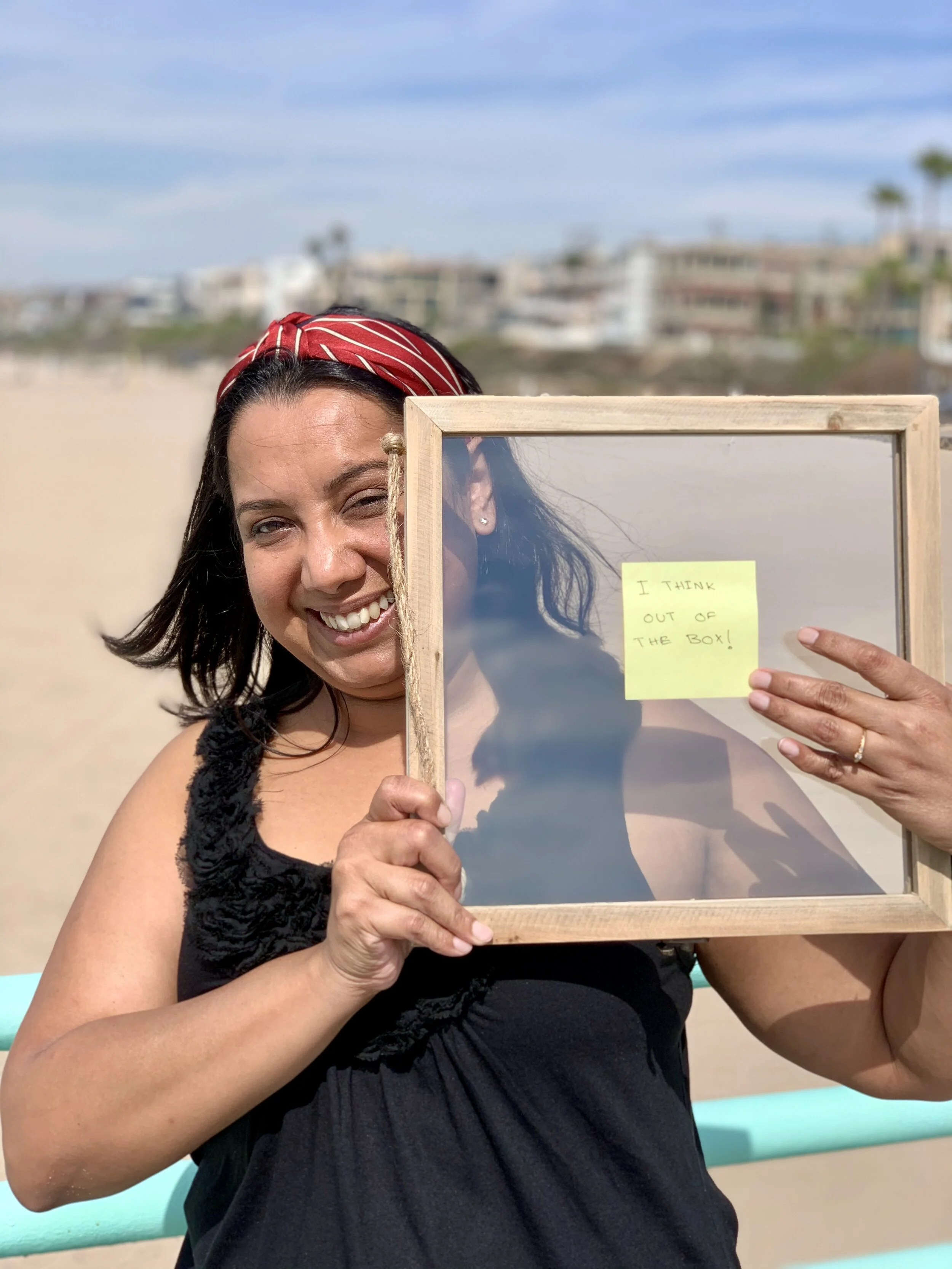
I am an idea connector. I look for unique ways to approach situations and solve challenges.
I use this talent by helping organizations redesign their people strategies, or businesses re-imagine their business solutions.

How might we convene a diverse group of global thinkers in a virtual forum to design solutions for work-related challenges caused by COVID-19?
In a previous post I wrote about the “why” behind #HRvsVirus.
Today, I want to share how we approached the experience, who was involved, and what the outcomes were.

An integral part of the design thinking method is reflection. Reflecting on what was accomplished and what could be improved upon is critical to inhabiting a mindset of iteration and experimentation.
One year into launching the hr.hackathon alliance is a good time to reflect.
A popular way to capture reflections in design thinking is the rose/thorn/bud method. Here we go…

I was fortunate enough to help out on the first hr.hackathon in Detroit, an idea launched by Nicole Dessain of talent.imperative.
Christina Chateauvert and other volunteers believed in the idea enough to take it to Detroit with the first topic being, “How might we collaborate with employees to co-create an improved employee experience?”
What was the top idea from my breakout group in the hr.hackathon? Making it safe for employees, of course. Not “safe” as in body harm but “safe” as in psychological safety. Being able to give direct feedback. Being able to say what you think without fear or repercussions. Eliminating this fear and building trust.

I recently had the honor to sit down with HR leader Daniel Vallejos and discuss how design thinking can be applied to HR, the importance of community, and the story behind why I created the hr.hackathon alliance.
You can listen to the podcast here.
Here are a few key insights from the podcast and associated 1 minute exercises I created for you:


Nicole Dessain is a colleague who, among other roles, is founder of DisruptHR Chicago. This past week the organization held its second hackathon event, where a group of 50 people sign up to spend 2.5 hours brainstorming potential ideas to address an organizational challenge. The most recent hackathon focused on how to increase diversity in recruiting for Chicago startups, a challenged offered up by Shayna Harris, COO of Farmer’s Fridge.